
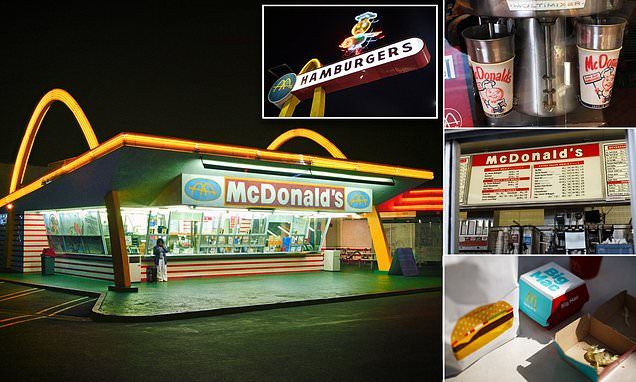
My little brother was a finicky eater. All he would eat were hotdogs and pickles. Then in the summer of 1968, when he was three and I was five, Asheville, NC got its first McDonalds. John fell in love with their hamburgers. There was nowhere to sit inside. Mom would order at the counter, and we would eat outside on benches around cement picnic tables under striped red and white umbrellas. What I remember most were the birds. Tiny sparrows hopped among the picnic tables and around our feet. It seemed there were hundreds of little, curious, chirping birds waiting for French fry handouts and crumbs. I have continued my fascination and passion for my feathered friends.
When I was six, my dad’s career with the US Army took us to Germany. In my memory, it was always cold, and we played indoors a lot. Many times I looked out the living room window and watched the starlings. The flocks were as thick as black clouds. There must’ve been thousands of birds in the murmurations. They danced and swirled to a rhythm only they could hear, something a genie might conjure. I was completely hypnotized every time I saw them.
I married in 1998. My wedding was on the ocean’s edge at St. Augustine Beach. The seagulls and ocean wading birds laughed and cheered. Flights of pelicans soared across the sand. They were good omens.
But where are the birds now? My husband and I love to drive, and we have driven across this wide country several times. There are no more sparrows in parking lots or fantastical clouds of meandering starlings. The beaches are barren. I was at St. Augustine Beach in June of 2025. I could count on one hand the number of seagulls standing one-legged on the sand.
People say, “Oh, the birds have found places to live where there are fewer people.” If only that were true. In the past 60 years, billions of birds have disappeared from the skies.
There may be a myriad of reasons that the birds have all but disappeared. Almost all the causes have been manmade, from acid rain and fertilizers to habitat loss to temperature changes due to animal and methane production and chlorofluorocarbons (Freon) in refrigeration units have affected the loss of millions of birds.
My wish is for my grandchildren to experience the same thrill of watching large flocks of birds as I did when I was young. The only positive take away that came from the world’s response to the COVID-19 pandemic in 2020 was that we got to witness the earth repairing itself. In the two months that airplanes were not allowed to fly and people had to stay home, the nitrogen dioxide emitted by car and plane pollution was reduced by 60%. Of course, two months is not enough time to bring back the birds, but it gives us insight and hope that change is possible. Maybe my wish will come true.